
Online service
Service hours: Monday to Saturday 9:00-18:00
Please choose online customer service:
Please choose online customer service:
0755-83483730 / 23823366
Title: The Marvels of Tantalum Capacitors: A Comprehensive Overview
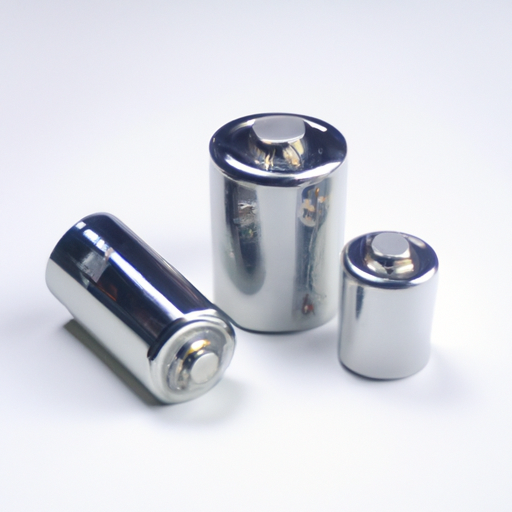
Introduction: In the world of electronic components, capacitors play a crucial role in storing and releasing electrical energy. Among the various types of capacitors available, tantalum capacitors, also known as 钽 capacitors, have gained significant popularity due to their unique characteristics and exceptional performance. This article aims to provide a comprehensive overview of tantalum capacitors, exploring their construction, working principle, advantages, applications, and future prospects.
I. Construction and Working Principle of Tantalum Capacitors: Tantalum capacitors are primarily composed of a tantalum metal anode, an insulating oxide layer, and a conductive cathode. The tantalum anode is formed by sintering tantalum powder, which is then subjected to anodization to create a thin tantalum pentoxide (Ta2O5) layer. This oxide layer acts as the dielectric, separating the anode and cathode. The cathode is typically made of a conductive material, such as manganese dioxide (MnO2), which ensures efficient charge transfer.
The working principle of tantalum capacitors is based on the electrostatic storage of charge. When a voltage is applied across the anode and cathode, an electric field is established within the tantalum pentoxide layer. This field causes the accumulation of positive and negative charges on the anode and cathode, respectively. The resulting potential difference between the anode and cathode allows the capacitor to store electrical energy.
II. Advantages of Tantalum Capacitors: 1. High Capacitance: Tantalum capacitors offer high capacitance values in a compact size, making them ideal for applications where space is limited.
2. Low Equivalent Series Resistance (ESR): The ESR of tantalum capacitors is significantly lower compared to other types, resulting in improved performance and reduced power losses.
3. Stable Capacitance: Tantalum capacitors exhibit excellent capacitance stability over a wide temperature range, making them suitable for applications in harsh environments.
4. Long Lifespan: Tantalum capacitors have a long operational life, often exceeding 10,000 hours, due to their robust construction and stable oxide layer.
5. Low Leakage Current: These capacitors have low leakage current, ensuring efficient energy storage and preventing power wastage.
III. Applications of Tantalum Capacitors: Tantalum capacitors find extensive use in various industries and applications, including:
1. Consumer Electronics: They are commonly employed in smartphones, tablets, laptops, and other portable devices due to their small size, high capacitance, and stable performance.
2. Automotive Electronics: Tantalum capacitors are used in automotive applications, such as engine control units, infotainment systems, and safety systems, where reliability and durability are crucial.
3. Industrial Equipment: They are utilized in industrial automation, power supply units, control systems, and instrumentation due to their ability to withstand high temperatures and harsh operating conditions.
4. Medical Devices: Tantalum capacitors are suitable for medical equipment, including pacemakers, defibrillators, and hearing aids, as they offer high reliability and long-term stability.
5. Aerospace and Defense: These capacitors are widely used in aerospace and defense applications, such as avionics, radar systems, and communication equipment, where high performance and reliability are paramount.
IV. Future Prospects and Challenges: The future of tantalum capacitors looks promising, with ongoing research and development focusing on enhancing their performance and addressing certain challenges. Some key areas of interest include:
1. Miniaturization: Efforts are being made to further reduce the size of tantalum capacitors while maintaining or increasing their capacitance values, enabling their integration into even smaller electronic devices.
2. Environmental Concerns: Tantalum is a finite resource, and its extraction can have environmental implications. Researchers are exploring alternative materials and recycling methods to mitigate these concerns.
3. Higher Voltage Ratings: The development of tantalum capacitors with higher voltage ratings is crucial to meet the increasing demands of modern electronic systems.
4. Improved Reliability: Ongoing research aims to enhance the reliability and lifespan of tantalum capacitors, ensuring their suitability for critical applications.
Conclusion: Tantalum capacitors, with their unique construction, exceptional performance, and wide-ranging applications, have become an integral part of modern electronic devices. Their high capacitance, low ESR, stability, and long lifespan make them a preferred choice in various industries. As research continues to advance, tantalum capacitors are expected to evolve further, meeting the demands of emerging technologies and contributing to the progress of the electronics industry.