
Online service
Service hours: Monday to Saturday 9:00-18:00
Please choose online customer service:
Please choose online customer service:
0755-83483730 / 23823366
Title: The Market Outlook for Tantalum Capacitors: A Comprehensive Analysis
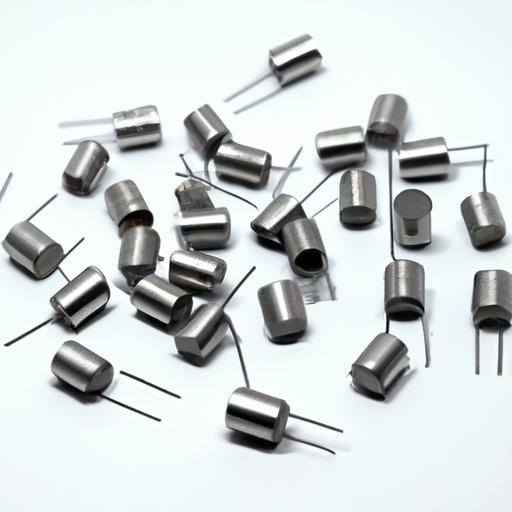
1. Overview of Tantalum Capacitors: Tantalum capacitors are passive electronic components that store and release electrical energy. They are constructed using tantalum metal as the anode, an insulating oxide layer as the dielectric, and a conductive material as the cathode. These capacitors offer high capacitance values in a compact size, making them ideal for applications where space is limited.
2. Market Size and Growth: The market for tantalum capacitors has witnessed steady growth over the years. The increasing demand for electronic devices, such as smartphones, tablets, laptops, and automotive electronics, has been a significant driver for the market. According to a report by Grand View Research, the global tantalum capacitor market size was valued at USD 1.8 billion in 2020 and is expected to reach USD 2.5 billion by 2028, growing at a CAGR of 4.5% from 2021 to 2028.
3. Key Market Trends: a. Miniaturization: The trend towards smaller and more compact electronic devices has fueled the demand for miniaturized components, including tantalum capacitors. Their high volumetric efficiency and low equivalent series resistance (ESR) make them an ideal choice for miniaturized applications.
b. Increasing Power Density: With the advancement of technology, electronic devices are becoming more powerful and energy-efficient. Tantalum capacitors, with their high energy density and low leakage current, are well-suited for high-power applications, such as power supplies, telecommunications, and industrial equipment.
c. Growing Demand in Automotive Electronics: The automotive industry is witnessing a rapid transformation with the integration of advanced electronics and electric vehicles. Tantalum capacitors find extensive usage in automotive electronics, including engine control units, infotainment systems, and safety features, driving the market growth.
4. Growth Factors: a. Rising Consumer Electronics Market: The proliferation of smartphones, wearables, and other consumer electronic devices is a significant growth factor for the tantalum capacitor market. The increasing disposable income, coupled with technological advancements, is driving the demand for these devices, subsequently boosting the demand for tantalum capacitors.
b. Industrial Automation and IoT: The industrial automation sector and the Internet of Things (IoT) are witnessing substantial growth. Tantalum capacitors play a crucial role in these applications, providing reliable energy storage and power delivery solutions. The expanding industrial automation and IoT sectors are expected to drive the demand for tantalum capacitors.
c. Aerospace and Defense Applications: The aerospace and defense sectors require high-performance electronic components that can withstand extreme conditions. Tantalum capacitors, with their excellent stability, reliability, and resistance to high temperatures, find extensive usage in these sectors. The increasing defense budgets and the growing aerospace industry contribute to the market growth.
5. Challenges and Restraints: a. Supply Chain Disruptions: Tantalum is a rare metal, and its availability depends on mining operations, geopolitical factors, and environmental regulations. Supply chain disruptions can impact the availability and pricing of tantalum capacitors, posing challenges to the market.
b. Price Volatility: The price of tantalum is subject to fluctuations due to supply-demand dynamics and geopolitical factors. This price volatility can affect the overall cost of tantalum capacitors, making them less attractive for cost-sensitive applications.
c. Competition from Alternative Technologies: Tantalum capacitors face competition from alternative capacitor technologies, such as ceramic capacitors, aluminum electrolytic capacitors, and solid-state capacitors. These alternatives offer similar performance characteristics at a lower cost, posing a challenge to the market growth.
6. Future Prospects: Despite the challenges, the future prospects for the tantalum capacitor market remain promising. The increasing demand for electronic devices, the growth of emerging technologies like 5G, electric vehicles, and renewable energy systems, and the need for reliable energy storage solutions are expected to drive the market growth. Additionally, advancements in tantalum capacitor technology, such as higher capacitance values, improved reliability, and reduced costs, will further enhance their market potential.
Conclusion: The market outlook for tantalum capacitors is positive, driven by the growing demand for electronic devices, miniaturization trends, and the expanding automotive, industrial automation, and aerospace sectors. However, challenges such as supply chain disruptions, price volatility, and competition from alternative technologies need to be addressed. With continuous technological advancements and the increasing adoption of emerging technologies, tantalum capacitors are poised to play a vital role in the future of the electronics industry.