
Online service
Service hours: Monday to Saturday 9:00-18:00
Please choose online customer service:
Please choose online customer service:
0755-83483730 / 23823366
Mainstream ceramic capacitors are widely used in various electronic devices and applications due to their excellent electrical properties, compact size, and cost-effectiveness. These capacitors are an essential component in electronic circuits, providing energy storage and filtering capabilities. In this article, we will explore the main parameters that define the performance and characteristics of mainstream ceramic capacitors.
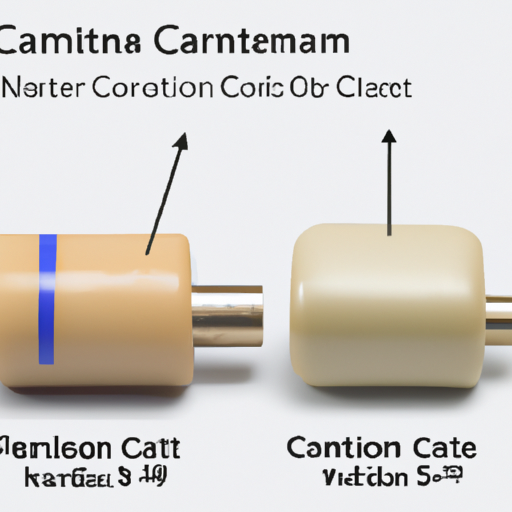
2. Voltage Rating: The voltage rating of a ceramic capacitor indicates the maximum voltage it can withstand without experiencing electrical breakdown. It is crucial to select a capacitor with a voltage rating higher than the maximum voltage expected in the circuit to avoid failure or damage. Voltage ratings for mainstream ceramic capacitors can range from a few volts to several hundred volts.
3. Temperature Coefficient of Capacitance (TCC): The TCC represents the change in capacitance with temperature variations. Ceramic capacitors are available in different classes based on their TCC, such as Class 1, Class 2, and Class 3. Class 1 capacitors have a near-zero TCC, making them suitable for applications requiring high stability over a wide temperature range. Class 2 capacitors have a moderate TCC and are commonly used in general-purpose applications. Class 3 capacitors have a high TCC and are suitable for applications where capacitance variation with temperature is not critical.
4. Dielectric Material: The dielectric material used in ceramic capacitors plays a significant role in determining their electrical properties. The most common dielectric materials used in mainstream ceramic capacitors are Class 1 - C0G (NP0), Class 2 - X7R, and Class 3 - Y5V. C0G capacitors offer high stability, low losses, and low capacitance values. X7R capacitors provide moderate stability, higher capacitance values, and are widely used in various applications. Y5V capacitors offer high capacitance values but have a high TCC and are suitable for non-critical applications.
5. ESR and ESL: Equivalent Series Resistance (ESR) and Equivalent Series Inductance (ESL) are parasitic elements present in ceramic capacitors that affect their performance. ESR represents the resistance component of the capacitor, while ESL represents the inductance component. Lower ESR and ESL values are desirable as they minimize energy losses and improve the capacitor's performance in high-frequency applications.
6. Size and Package: Mainstream ceramic capacitors are available in various sizes and packages to accommodate different application requirements. Surface Mount Technology (SMT) packages, such as 0402, 0603, 0805, and 1206, are commonly used in modern electronic devices due to their compact size and ease of assembly. Through-Hole Technology (THT) packages are also available for applications that require larger capacitance values or specific mounting requirements.
7. Reliability and Lifespan: Reliability is a crucial factor when selecting ceramic capacitors for critical applications. Manufacturers provide reliability data, such as Mean Time Between Failures (MTBF) and Failure Rate (FR), to assess the expected lifespan and performance of the capacitors. It is essential to consider these parameters to ensure the longevity and reliability of the electronic circuits.
In conclusion, mainstream ceramic capacitors are versatile components that offer a wide range of capacitance values, voltage ratings, and temperature coefficients. Understanding the parameters discussed above is crucial for selecting the right ceramic capacitor for a specific application. By considering these parameters, engineers and designers can ensure optimal performance, reliability, and cost-effectiveness in their electronic designs.