
Online service
Service hours: Monday to Saturday 9:00-18:00
Please choose online customer service:
Please choose online customer service:
0755-83483730 / 23823366
Title: Advancements in Test and Measurement Manufacturing Processes
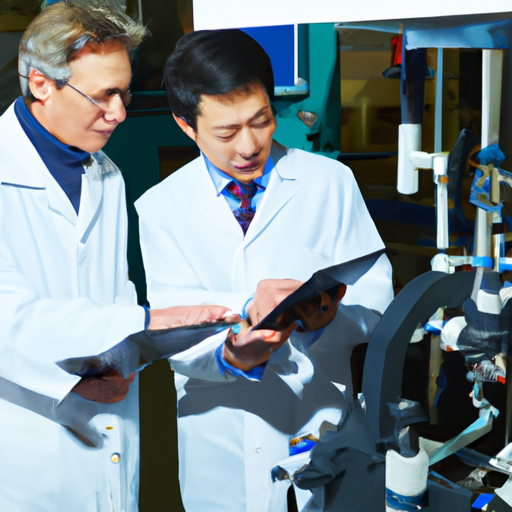
1. Automated Testing Systems (200 words) One of the most significant advancements in test and measurement manufacturing processes is the widespread adoption of automated testing systems. These systems utilize robotics, artificial intelligence, and machine learning algorithms to perform complex testing procedures with minimal human intervention. Automated testing systems offer several benefits, including increased accuracy, repeatability, and speed. They can handle large volumes of tests, reducing the time required for quality assurance and enabling faster product development cycles.
2. Internet of Things (IoT) Integration (200 words) The integration of the Internet of Things (IoT) into test and measurement manufacturing processes has revolutionized the way data is collected and analyzed. IoT-enabled devices and sensors can be embedded in test equipment, allowing real-time monitoring and analysis of various parameters. This integration enables manufacturers to gather valuable insights, identify potential issues, and optimize their manufacturing processes. IoT integration also facilitates remote monitoring and control, reducing the need for physical presence during testing procedures.
3. Advanced Data Analytics (250 words) The advent of advanced data analytics has transformed the way test and measurement data is analyzed and utilized. Traditional statistical analysis methods are being replaced by sophisticated algorithms that can process vast amounts of data in real-time. These algorithms can identify patterns, anomalies, and correlations that may not be apparent to human analysts. By leveraging machine learning and artificial intelligence, manufacturers can gain deeper insights into product performance, identify potential defects, and optimize testing procedures. Advanced data analytics also enable predictive maintenance, allowing manufacturers to detect and address issues before they impact product quality.
4. Non-Destructive Testing (250 words) Non-destructive testing (NDT) techniques have seen significant advancements in recent years, enabling manufacturers to assess product quality without causing damage. Techniques such as ultrasonic testing, X-ray inspection, and thermal imaging have become more accurate, efficient, and cost-effective. NDT techniques are particularly valuable in industries such as aerospace, automotive, and electronics, where product integrity is critical. These techniques allow manufacturers to detect defects, cracks, and material inconsistencies without compromising the product's structural integrity.
5. Virtual and Augmented Reality (200 words) Virtual and augmented reality (VR/AR) technologies are being increasingly integrated into test and measurement manufacturing processes. These technologies offer immersive and interactive experiences, allowing engineers and technicians to visualize and simulate complex testing scenarios. VR/AR can be used for training purposes, enabling technicians to practice testing procedures in a virtual environment before performing them on physical products. These technologies also facilitate remote collaboration, allowing experts to guide technicians in real-time, regardless of their physical location.
Conclusion (100 words) The latest advancements in test and measurement manufacturing processes have revolutionized the way products are tested, ensuring higher quality, reliability, and efficiency. Automated testing systems, IoT integration, advanced data analytics, non-destructive testing techniques, and VR/AR technologies have all contributed to improving product development cycles, reducing costs, and enhancing overall customer satisfaction. As technology continues to evolve, it is crucial for manufacturers to stay updated with the latest advancements in test and measurement manufacturing processes to remain competitive in the ever-changing market.