
Online service
Service hours: Monday to Saturday 9:00-18:00
Please choose online customer service:
Please choose online customer service:
0755-83483730 / 23823366
Wireless radio frequency recognition (RFID) technology is a widely used system that allows for the identification and tracking of objects using radio waves. This technology consists of several key components and modules that work together to enable efficient and accurate data collection. In this article, we will explore the various components and modules of wireless RFID technology and discuss their functionalities and applications.
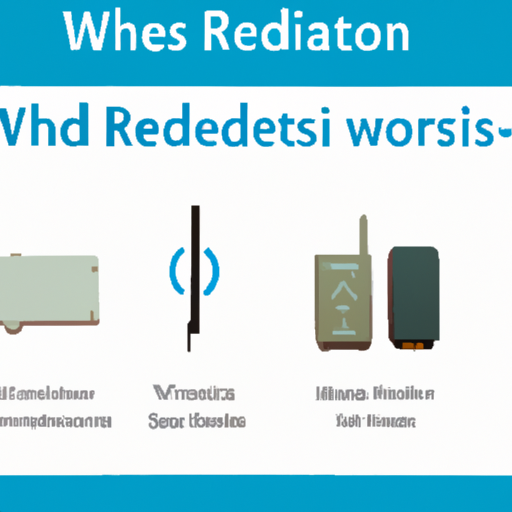
2. RFID Readers: RFID readers, also known as interrogators, are devices that communicate with RFID tags. These readers emit radio waves and receive signals from the tags within their range. The readers consist of an antenna, a transceiver, and a decoder. The antenna emits radio waves and captures the signals reflected back by the tags. The transceiver converts the radio waves into a digital format that can be understood by the decoder. The decoder then processes the received data and sends it to a computer or a database for further analysis. RFID readers can be fixed or handheld, depending on the application requirements.
3. RFID Middleware: RFID middleware is software that acts as a bridge between the RFID hardware and the enterprise software systems. It provides a platform for managing and integrating the data collected from RFID readers and tags. The middleware is responsible for filtering, aggregating, and transforming the raw RFID data into a format that can be easily understood and utilized by the enterprise systems. It also enables real-time monitoring and control of the RFID infrastructure, allowing for efficient management of the RFID network.
4. RFID Antennas: RFID antennas play a crucial role in the wireless communication between RFID readers and tags. These antennas are responsible for transmitting and receiving radio signals. The design and placement of the antennas significantly impact the performance and range of the RFID system. Different types of antennas, such as linear polarized, circular polarized, and phased array antennas, are used depending on the specific application requirements. The selection of the appropriate antenna is essential to ensure optimal read range, accuracy, and reliability of the RFID system.
5. RFID Software: RFID software is an essential component that enables the configuration, management, and analysis of RFID data. This software allows users to set up and customize the RFID system parameters, such as read range, data filtering, and event triggers. It also provides tools for monitoring and analyzing the collected data, generating reports, and integrating with other enterprise systems. RFID software plays a crucial role in maximizing the value and efficiency of the RFID technology by providing real-time visibility and actionable insights into the supply chain, inventory management, asset tracking, and other applications.
6. RFID Integration Modules: RFID integration modules are hardware components that facilitate the integration of RFID technology into existing systems or devices. These modules are designed to be easily integrated into various devices, such as printers, handheld terminals, mobile computers, and industrial equipment. They provide the necessary interfaces and protocols to enable seamless communication between the RFID hardware and the host device. RFID integration modules are widely used in applications such as access control, ticketing, payment systems, and asset tracking.
In conclusion, wireless RFID technology consists of several key components and modules that work together to enable efficient and accurate identification and tracking of objects. RFID tags, readers, antennas, middleware, software, and integration modules form the foundation of the RFID system. Understanding the functionalities and applications of these components is crucial for implementing successful RFID solutions in various industries, including retail, logistics, healthcare, and manufacturing.