
Online service
Service hours: Monday to Saturday 9:00-18:00
Please choose online customer service:
Please choose online customer service:
0755-83483730 / 23823366
Title: Choosing the Right Chip Resistor Component Class: A Comprehensive Guide
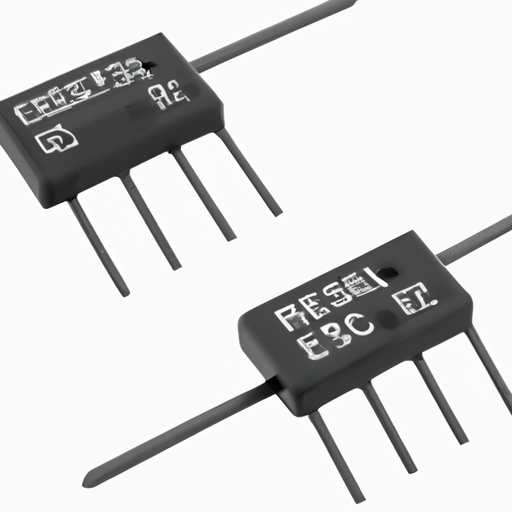
1. Understanding Chip Resistor Component Classes: Chip resistors are classified into different component classes based on their tolerance, power rating, and temperature coefficient of resistance (TCR). These classes include E-24, E-96, E-48, and E-192. Each class represents a specific range of values, allowing engineers to select resistors that meet their requirements precisely.
2. Tolerance: Tolerance refers to the permissible deviation from the nominal resistance value. It is expressed as a percentage and indicates the resistor's accuracy. The most common tolerance classes for chip resistors are ±1%, ±5%, and ±10%. Choosing the appropriate tolerance class depends on the application's sensitivity to resistance variations and the desired level of precision.
- ±1% Tolerance: This class is suitable for applications that require high precision, such as precision measurement equipment, medical devices, and laboratory instruments. These resistors offer minimal resistance deviation, ensuring accurate and reliable performance.
- ±5% Tolerance: This class is widely used in general-purpose applications, where a moderate level of precision is sufficient. It is suitable for consumer electronics, automotive applications, and most digital circuits. The ±5% tolerance class provides a good balance between cost-effectiveness and performance.
- ±10% Tolerance: This class is commonly used in applications where precision is not critical, such as power supplies, lighting systems, and industrial equipment. The ±10% tolerance class offers a wider range of resistance values, making it suitable for less demanding applications.
3. Power Rating: The power rating of a chip resistor determines its ability to dissipate heat generated during operation. It is crucial to select a resistor with an appropriate power rating to prevent overheating and ensure long-term reliability. The power rating is typically specified in watts (W) and varies across different component classes.
- Low Power (0.1W - 0.25W): This class is suitable for low-power applications, such as signal conditioning circuits, sensors, and small electronic devices. These resistors can handle lower levels of heat dissipation and are physically smaller in size.
- Medium Power (0.5W - 1W): This class is commonly used in applications that require moderate power dissipation, such as audio amplifiers, power supplies, and motor control circuits. These resistors are larger in size and can handle higher levels of heat.
- High Power (1W and above): This class is designed for high-power applications, including power electronics, industrial machinery, and automotive systems. High-power resistors are physically larger and can handle significant heat dissipation.
4. Temperature Coefficient of Resistance (TCR): The TCR indicates how the resistance value of a chip resistor changes with temperature variations. It is expressed in parts per million per degree Celsius (ppm/°C). Choosing the appropriate TCR class is crucial to ensure stable resistance values across a wide temperature range.
- Low TCR (25 ppm/°C - 50 ppm/°C): This class is suitable for applications that require high stability over a wide temperature range, such as precision instrumentation, aerospace, and telecommunications. Low TCR resistors minimize resistance drift due to temperature changes.
- Standard TCR (100 ppm/°C - 200 ppm/°C): This class is commonly used in general-purpose applications, where moderate temperature stability is sufficient. It is suitable for most consumer electronics, automotive applications, and digital circuits.
- High TCR (300 ppm/°C and above): This class is used in applications where resistance variations due to temperature changes are acceptable, such as power supplies, lighting systems, and industrial equipment.
Conclusion: Choosing the right chip resistor component class is crucial for ensuring optimal performance and reliability in electronic circuits. By considering factors such as tolerance, power rating, and temperature coefficient of resistance, engineers can select resistors that meet their specific application requirements. Understanding the different component classes and their suitability for various applications will help in making informed decisions and achieving desired outcomes.