
Online service
Service hours: Monday to Saturday 9:00-18:00
Please choose online customer service:
Please choose online customer service:
0755-83483730 / 23823366
Tongkou resistors are a type of electronic component that is used to limit the flow of electric current in a circuit. They are commonly used in a wide range of electronic devices, from simple household appliances to complex industrial machinery. In this article, we will explore how Tongkou resistors work, their different types, and their applications.
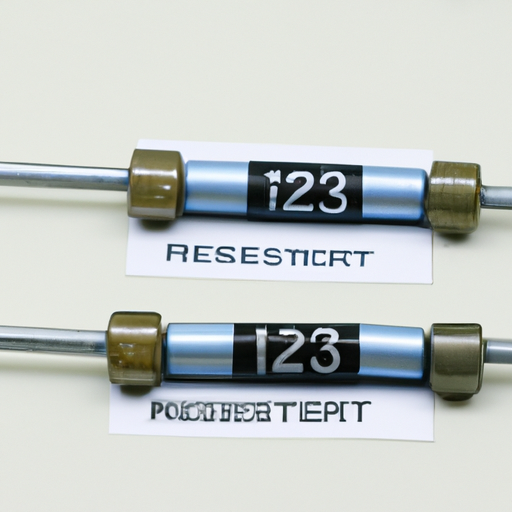
Tongkou resistors work on the principle of resistance, which is the property of a material to resist the flow of electric current. When an electric current passes through a resistor, the resistor converts some of the electrical energy into heat. This heat dissipates into the surrounding environment, effectively limiting the flow of current through the circuit.
Tongkou resistors are made of a material with high resistance, such as carbon or metal. The resistance of the material is determined by its length, cross-sectional area, and resistivity. The longer and thinner the material, the higher the resistance. Tongkou resistors are typically cylindrical in shape, with two metal leads attached to either end for easy connection to a circuit.
When a Tongkou resistor is connected in series with a circuit, it limits the flow of current by providing a specific amount of resistance. This resistance is measured in ohms (Ω) and is determined by the color bands on the resistor. The higher the resistance value, the lower the current flow through the circuit.
Types of Tongkou Resistors
There are several different types of Tongkou resistors, each with its own unique characteristics and applications. Some of the most common types include:
1. Carbon Film Resistors: These resistors are made of a thin film of carbon deposited on a ceramic substrate. They are inexpensive and have a high tolerance for temperature changes, making them suitable for a wide range of applications.
2. Metal Film Resistors: These resistors are made of a thin film of metal, such as nickel-chromium or tin oxide, deposited on a ceramic substrate. They have a higher tolerance for temperature changes and provide more accurate resistance values than carbon film resistors.
3. Wirewound Resistors: These resistors are made of a coil of wire wound around a ceramic or fiberglass core. They have a high power rating and can handle large currents, making them suitable for high-power applications.
4. Variable Resistors: Also known as potentiometers or rheostats, these resistors have a variable resistance value that can be adjusted by turning a knob or slider. They are commonly used in volume controls and tuning circuits.
Applications of Tongkou Resistors
Tongkou resistors are used in a wide range of electronic devices and circuits, including:
1. Voltage Dividers: Tongkou resistors are commonly used in voltage divider circuits to divide a voltage into smaller parts. This is useful for controlling the brightness of an LED or the speed of a motor.
2. Current Limiting: Tongkou resistors are used to limit the flow of current in a circuit, protecting sensitive components from damage. They are often used in power supplies and battery charging circuits.
3. Signal Conditioning: Tongkou resistors are used to condition signals in electronic circuits, such as filtering out noise or adjusting the gain of an amplifier.
4. Pull-Up and Pull-Down Resistors: Tongkou resistors are used in digital circuits to ensure that a signal is in a known state when no input is present. Pull-up resistors connect a signal to a high voltage, while pull-down resistors connect a signal to ground.
In conclusion, Tongkou resistors are an essential component in electronic circuits, providing resistance to limit the flow of current and protect sensitive components. They come in various types, each with its own unique characteristics and applications. Whether you are building a simple LED circuit or a complex industrial machine, Tongkou resistors play a crucial role in ensuring the proper functioning of your electronic devices.