
Online service
Service hours: Monday to Saturday 9:00-18:00
Please choose online customer service:
Please choose online customer service:
0755-83483730 / 23823366
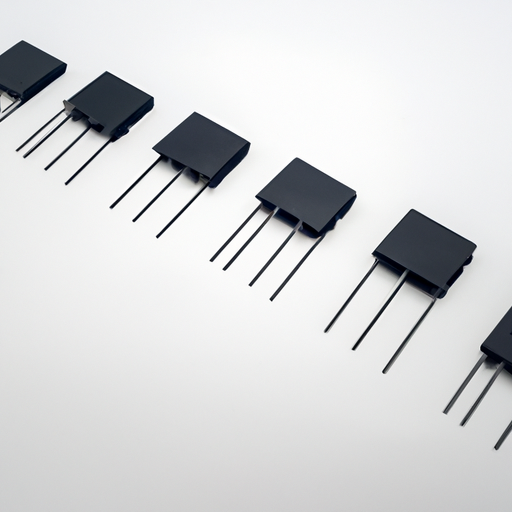
Chip resistors are small electronic components that provide resistance in a circuit. Unlike traditional resistors, which are often larger and may have leads for mounting, chip resistors are designed for surface mounting directly onto printed circuit boards (PCBs). Their compact size and efficiency make them ideal for modern electronic devices.
Chip resistors play a crucial role in controlling current flow, dividing voltages, and providing biasing in various electronic applications. They are essential in ensuring the proper functioning of circuits, contributing to the reliability and performance of electronic devices. As technology advances, the demand for smaller, more efficient components has made chip resistors increasingly important in the design of compact electronic systems.
This article will explore the mainstream models of chip resistors, including their types, key specifications, popular manufacturers, applications, and future trends in technology. By understanding these aspects, readers will gain insight into the significance of chip resistors in modern electronics.
Thin film resistors are made by depositing a thin layer of resistive material, typically metal, onto a ceramic substrate. The resistance value is determined by the thickness and length of the film.
**Advantages:** Thin film resistors offer high precision, low noise, and excellent temperature stability. They are ideal for applications requiring tight tolerances.
**Disadvantages:** They can be more expensive than other types of resistors and may have lower power ratings.
Thin film resistors are commonly used in precision measurement devices, medical equipment, and high-frequency applications.
Thick film resistors are constructed by screen-printing a thick layer of resistive paste onto a substrate, usually ceramic. The resistance is determined by the composition and thickness of the paste.
**Advantages:** Thick film resistors are cost-effective, have a wide range of resistance values, and can handle higher power levels.
**Disadvantages:** They typically have lower precision and stability compared to thin film resistors.
Thick film resistors are widely used in consumer electronics, automotive applications, and general-purpose circuits.
Wirewound resistors are made by winding a metal wire around a ceramic or fiberglass core. The resistance is determined by the wire's length, diameter, and material.
**Advantages:** Wirewound resistors offer high power ratings and excellent stability.
**Disadvantages:** They are larger than other types of chip resistors and may have inductive properties that can affect high-frequency applications.
Wirewound resistors are often used in power supplies, audio equipment, and industrial applications.
Metal foil resistors are made by etching a thin layer of metal foil into a specific pattern on a substrate. This design allows for precise control over resistance values.
**Advantages:** Metal foil resistors provide high accuracy, low temperature coefficients, and excellent stability.
**Disadvantages:** They can be more expensive than other resistor types.
Metal foil resistors are used in precision applications, such as instrumentation and aerospace electronics.
The resistance value of a chip resistor is measured in ohms (Ω) and determines how much current will flow through the resistor when a voltage is applied.
Tolerance indicates the accuracy of the resistor's resistance value, expressed as a percentage. A lower tolerance means higher precision.
The temperature coefficient measures how much the resistance changes with temperature, typically expressed in parts per million per degree Celsius (ppm/°C). A lower temperature coefficient indicates better stability.
The power rating indicates the maximum power the resistor can dissipate without overheating, measured in watts (W). Exceeding this rating can lead to failure.
The voltage rating specifies the maximum voltage that can be applied across the resistor without causing breakdown.
Chip resistors come in various sizes and form factors, which are crucial for fitting into compact electronic designs. Common sizes include 0201, 0402, 0603, and 0805.
Vishay is a leading manufacturer of passive electronic components, including a wide range of chip resistors.
Vishay CRC Series: Known for high precision and low temperature coefficients.
Vishay WSL Series: Thick film resistors with high power ratings.
Yageo is a global leader in passive components, offering a diverse range of chip resistors.
Yageo RC Series: Thick film resistors suitable for general applications.
Yageo MCR Series: Metal film resistors with high precision.
Panasonic manufactures a variety of electronic components, including chip resistors known for their reliability.
Panasonic ERJ Series: Thin film resistors with excellent stability.
Panasonic RSM Series: Thick film resistors for automotive applications.
Bourns specializes in electronic components, including a range of chip resistors designed for various applications.
Bourns CR Series: Thick film resistors with high power ratings.
Bourns MRS Series: Metal film resistors for precision applications.
KOA Speer offers a wide selection of chip resistors, focusing on high-quality and reliable components.
KOA RK Series: Thin film resistors with low noise.
KOA RMC Series: Thick film resistors for general-purpose use.
Chip resistors are widely used in smartphones, tablets, and other consumer devices to manage power and signal integrity.
In automotive applications, chip resistors are essential for controlling electronic systems, including engine management and safety features.
Chip resistors are critical in telecommunications equipment, ensuring reliable signal transmission and processing.
In industrial settings, chip resistors are used in control systems, automation, and monitoring devices.
Chip resistors are vital in medical devices, where precision and reliability are paramount for patient safety and accurate diagnostics.
As electronic devices continue to shrink, the demand for smaller chip resistors will grow. Manufacturers are developing increasingly compact designs without compromising performance.
Future chip resistors will focus on improved performance metrics, including lower noise levels, better temperature stability, and higher power ratings.
With a growing emphasis on sustainability, manufacturers are exploring eco-friendly materials and production processes for chip resistors.
The trend towards system-on-chip (SoC) designs may lead to the integration of resistors with other components, reducing space and improving efficiency.
Chip resistors are essential components in modern electronics, available in various types, each with unique advantages and applications. Understanding their specifications and the leading manufacturers can help designers select the right resistor for their needs.
As technology advances, chip resistors will continue to play a critical role in ensuring the reliability and performance of electronic devices across various industries.
The future of chip resistor technology looks promising, with trends towards miniaturization, enhanced performance, and environmental sustainability shaping the next generation of electronic components.
- IEEE Transactions on Components, Packaging and Manufacturing Technology
- Journal of Electronic Materials
- Market Research Reports on Passive Components
- Industry Analysis from IHS Markit
- Vishay, Yageo, Panasonic, Bourns, KOA Speer product catalogs
- Electronics tutorials and educational websites
- Manufacturer blogs and technical articles
This comprehensive overview of chip resistors highlights their significance in modern electronics, providing valuable insights for engineers, designers, and enthusiasts alike.