
Online service
Service hours: Monday to Saturday 9:00-18:00
Please choose online customer service:
Please choose online customer service:
0755-83483730 / 23823366
Title: Exploring the Key Product Categories of Cable Components
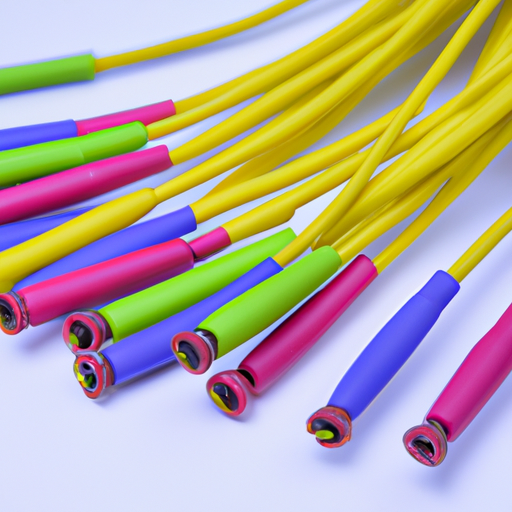
1. Connectors and Adapters (200 words) Connectors and adapters are fundamental cable components that enable the seamless connection of cables to various devices and systems. Connectors are designed to join cables together, while adapters facilitate the connection between cables with different interfaces. These components come in various types, including USB, HDMI, Ethernet, and coaxial connectors, among others. Connectors and adapters are widely used in consumer electronics, telecommunications, computer networks, and audio/video systems.
2. Cable Assemblies (250 words) Cable assemblies are pre-manufactured cables that consist of connectors, wires, and protective jackets. These components are designed to simplify the installation and maintenance of complex systems by providing a ready-to-use solution. Cable assemblies are available in different configurations, such as patch cables, ribbon cables, and custom-made harnesses. They find extensive applications in industries like automotive, aerospace, medical, and telecommunications.
3. Cable Management Systems (250 words) Cable management systems are essential for organizing and protecting cables in various environments. These systems include cable trays, raceways, conduits, and cable ties. Cable trays provide a safe and organized pathway for cables, while raceways conceal and protect cables along walls or ceilings. Conduits offer additional protection by enclosing cables in a rigid or flexible tube. Cable ties are used to secure and bundle cables together. Cable management systems are crucial in data centers, offices, industrial facilities, and residential buildings.
4. Cable Markers and Labels (200 words) Cable markers and labels are used to identify and track cables in complex systems. These components are essential for efficient troubleshooting, maintenance, and cable management. Cable markers can be attached directly to cables or incorporated into cable management systems. They come in various forms, including heat-shrink labels, wrap-around labels, and self-laminating labels. Cable markers and labels are widely used in telecommunications, electrical installations, and industrial automation.
5. Cable Testing and Measurement Equipment (250 words) Cable testing and measurement equipment are vital for ensuring the quality and performance of cables. These components include cable testers, analyzers, and certifiers. Cable testers are used to verify cable continuity, detect faults, and measure signal integrity. Analyzers provide advanced testing capabilities, such as impedance measurement and crosstalk analysis. Certifiers are used to validate cable installations against industry standards. Cable testing and measurement equipment are extensively used in telecommunications, network infrastructure, and manufacturing industries.
Conclusion (100 words) Cable components encompass a wide range of products that are essential for the proper functioning and reliability of electrical and communication systems. Connectors and adapters enable seamless connections, cable assemblies simplify installations, cable management systems organize and protect cables, cable markers and labels aid in identification, and cable testing and measurement equipment ensure quality and performance. Understanding the key product categories of cable components is crucial for professionals working in various industries, as it allows them to make informed decisions regarding the selection and implementation of these components.