
Online service
Service hours: Monday to Saturday 9:00-18:00
Please choose online customer service:
Please choose online customer service:
0755-83483730 / 23823366
Title: A Comprehensive Guide to Popular Cable Models: Unveiling the Backbone of Modern Connectivity
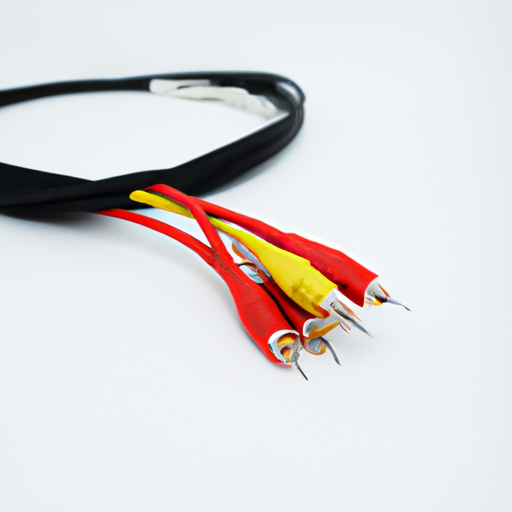
1. USB Cables (200 words) USB (Universal Serial Bus) cables have become ubiquitous in our daily lives, connecting a wide range of devices such as smartphones, tablets, cameras, printers, and more. The most recent iteration, USB-C, has gained immense popularity due to its versatility and enhanced capabilities. USB-C cables offer faster data transfer speeds, higher power delivery, and the ability to transmit audio and video signals. With its reversible design, USB-C has become the go-to cable for many devices, replacing older USB-A and micro-USB connectors.
2. HDMI Cables (200 words) High-Definition Multimedia Interface (HDMI) cables have revolutionized the way we connect our audiovisual devices. HDMI cables transmit high-quality audio and video signals, supporting resolutions up to 4K and even 8K in the latest versions. They are commonly used to connect devices such as televisions, monitors, projectors, gaming consoles, and Blu-ray players. HDMI cables also support additional features like Ethernet connectivity, audio return channel (ARC), and consumer electronics control (CEC), making them an essential component of any modern entertainment setup.
3. Ethernet Cables (200 words) Ethernet cables are the backbone of wired internet connectivity, enabling high-speed data transfer between devices and networks. These cables utilize twisted pair wiring to transmit data signals, providing reliable and stable connections. Ethernet cables come in various categories, such as Cat5e, Cat6, and Cat7, each offering different speeds and capabilities. They are widely used in homes, offices, and data centers to connect computers, routers, switches, and other network devices. Ethernet cables have evolved over the years to support faster data rates, reduced interference, and improved performance, ensuring seamless internet connectivity.
4. Thunderbolt Cables (200 words) Thunderbolt cables are designed to provide high-speed data transfer and connectivity for devices such as external hard drives, monitors, and docking stations. Developed by Intel in collaboration with Apple, Thunderbolt cables combine data transfer, video output, and power delivery into a single cable. Thunderbolt 3, the latest version, supports data transfer speeds of up to 40 Gbps, making it ideal for demanding tasks like video editing and gaming. Thunderbolt cables also support daisy-chaining, allowing multiple devices to be connected in a series, simplifying cable management and reducing clutter.
5. DisplayPort Cables (200 words) DisplayPort cables are widely used to connect computers, laptops, and monitors, delivering high-quality video and audio signals. DisplayPort cables support various resolutions, including 4K and 8K, and offer features like multi-stream transport (MST) for connecting multiple monitors and high dynamic range (HDR) for enhanced visual quality. DisplayPort cables are known for their robustness and versatility, making them a popular choice for gamers, graphic designers, and professionals who require accurate color reproduction and high refresh rates.
Conclusion (100 words) Cables are the unsung heroes that enable seamless connectivity and communication in our modern world. From USB and HDMI to Ethernet, Thunderbolt, and DisplayPort cables, each model serves a specific purpose and has revolutionized the way we connect and interact with our devices. As technology continues to advance, we can expect further innovations in cable design, offering faster speeds, higher resolutions, and improved functionality. So, the next time you plug in a cable, take a moment to appreciate the incredible technology that lies behind it, connecting us to the digital realm.