
Online service
Service hours: Monday to Saturday 9:00-18:00
Please choose online customer service:
Please choose online customer service:
0755-83483730 / 23823366
Industrial automation and control systems play a crucial role in enhancing productivity, efficiency, and safety in various industries. These systems utilize advanced technologies to automate processes, monitor operations, and control machinery and equipment. With the rapid advancements in technology, there is a wide range of industrial automation and control product types available in the market. In this article, we will explore some of the popular industrial automation and control product types that are widely used across industries.
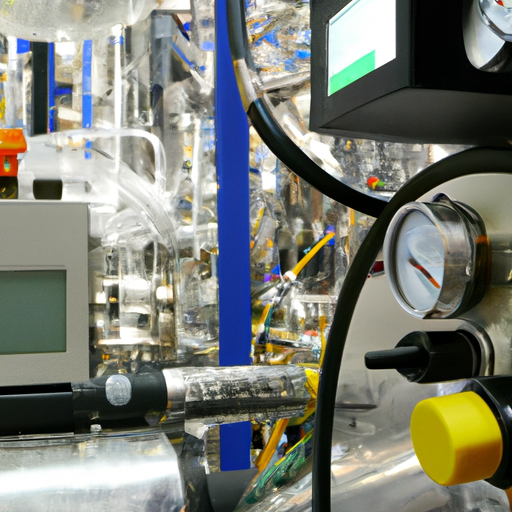
2. Human-Machine Interface (HMI) Systems: HMI systems provide a graphical interface for operators to interact with industrial automation systems. These systems typically consist of touchscreens, keypads, and other input devices that allow operators to monitor and control processes. HMIs provide real-time data visualization, alarms, and notifications, enabling operators to make informed decisions and troubleshoot issues quickly. They are commonly used in industries such as manufacturing, food and beverage, and pharmaceuticals.
3. Supervisory Control and Data Acquisition (SCADA) Systems: SCADA systems are used to monitor and control large-scale industrial processes and infrastructure. These systems collect data from various sensors and devices, and provide a centralized control interface for operators. SCADA systems enable real-time monitoring, data logging, and remote control of processes, making them ideal for industries such as water and wastewater management, energy distribution, and transportation.
4. Distributed Control Systems (DCS): DCS is a control system architecture that allows for distributed control and monitoring of industrial processes. Unlike PLCs, which are typically used for localized control, DCS enables centralized control of multiple processes across different locations. DCS systems consist of multiple controllers connected to a central server, allowing for seamless integration and coordination of various processes. They are commonly used in industries such as oil and gas, chemical, and power generation.
5. Industrial Robots: Industrial robots are automated machines designed to perform tasks with precision and efficiency. These robots are equipped with sensors, actuators, and programming capabilities, enabling them to perform a wide range of tasks, such as assembly, welding, material handling, and inspection. Industrial robots are widely used in industries such as automotive, electronics, and pharmaceuticals, where they help improve productivity, quality, and worker safety.
6. Motion Control Systems: Motion control systems are used to control the movement of machinery and equipment. These systems consist of servo motors, drives, and controllers that work together to precisely control the speed, position, and torque of moving parts. Motion control systems are commonly used in industries such as packaging, printing, and robotics, where precise and synchronized movement is critical.
7. Industrial Communication Networks: Industrial communication networks are essential for connecting various devices and components within an industrial automation system. These networks enable seamless data exchange, control, and monitoring between different devices, such as PLCs, HMIs, and sensors. Popular industrial communication protocols include Ethernet/IP, Profibus, Modbus, and DeviceNet. These networks are crucial for industries such as manufacturing, energy, and transportation, where real-time data exchange is vital for efficient operations.
In conclusion, industrial automation and control systems have revolutionized the way industries operate by enhancing productivity, efficiency, and safety. The product types mentioned above are just a few examples of the wide range of industrial automation and control products available in the market. As technology continues to advance, we can expect to see further innovations in this field, enabling industries to achieve even greater levels of automation and control.