
Online service
Service hours: Monday to Saturday 9:00-18:00
Please choose online customer service:
Please choose online customer service:
0755-83483730 / 23823366
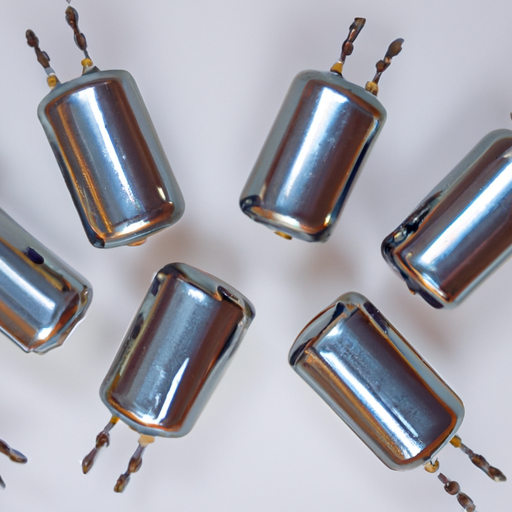
High-voltage parallel capacitors are essential components in various electrical systems, playing a crucial role in energy storage, filtering, and power factor correction. These capacitors are designed to operate at high voltage levels, making them indispensable in applications ranging from power electronics to renewable energy systems. This article aims to explore popular models of high-voltage parallel capacitors, their specifications, and their applications across different industries.
High-voltage capacitors are capacitors that can handle voltage levels significantly above standard operating voltages, typically rated for voltages exceeding 1 kV. They are classified based on their voltage ratings, capacitance values, and dielectric materials. These capacitors are used in various applications, including power transmission, energy storage, and signal processing.
Parallel capacitors are connected in such a way that their capacitance values add up while the voltage rating remains the same. This configuration offers several benefits, including increased total capacitance, improved stability, and enhanced reliability. By using parallel capacitors, engineers can design circuits that meet specific capacitance and voltage requirements, optimizing performance in high-voltage applications.
When selecting high-voltage capacitors, several key specifications must be considered:
Capacitance is measured in farads (F) and indicates the capacitor's ability to store electrical energy. High-voltage capacitors come in various capacitance values, from microfarads (µF) to farads, depending on the application.
Voltage ratings indicate the maximum voltage a capacitor can handle without failure. High-voltage capacitors are designed to operate safely at elevated voltage levels, ensuring reliability in demanding environments.
Tolerance levels specify the allowable deviation from the nominal capacitance value. High-voltage capacitors typically have tolerance levels ranging from ±5% to ±20%, depending on the type and application.
Temperature coefficients indicate how capacitance changes with temperature variations. High-voltage capacitors are designed to maintain performance across a range of temperatures, ensuring stability in various operating conditions.
The dielectric material used in a capacitor affects its performance, reliability, and application suitability. Common dielectric materials for high-voltage capacitors include ceramic, film, electrolytic, mica, and supercapacitor materials.
Ceramic capacitors are widely used in high-voltage applications due to their excellent stability, low losses, and high insulation resistance. They are available in various dielectric types, including Class 1 (C0G) and Class 2 (X7R).
Ceramic capacitors are commonly used in power supply circuits, snubber circuits, and filtering applications in telecommunications and industrial equipment.
C0G (NP0): Known for its stability and low loss, C0G capacitors are ideal for high-frequency applications.
X7R: These capacitors offer a good balance between capacitance and voltage rating, making them suitable for general-purpose applications.
Film capacitors are known for their reliability, low self-inductance, and excellent thermal stability. They are constructed using thin plastic films as dielectrics, which can handle high voltages.
Film capacitors are widely used in power electronics, audio equipment, and renewable energy systems, particularly in applications requiring high voltage and low losses.
Polypropylene Capacitors: These capacitors are known for their low dielectric losses and high insulation resistance, making them suitable for high-frequency applications.
Polyester Capacitors: While slightly less stable than polypropylene, polyester capacitors are cost-effective and widely used in various applications.
Electrolytic capacitors are polarized capacitors that offer high capacitance values in a compact size. They are typically used in applications requiring significant energy storage.
These capacitors are commonly found in power supply circuits, energy storage systems, and audio applications.
Aluminum Electrolytic Capacitors: Known for their high capacitance and voltage ratings, aluminum electrolytic capacitors are widely used in power electronics.
Tantalum Capacitors: These capacitors offer higher reliability and stability compared to aluminum electrolytics, making them suitable for critical applications.
Mica capacitors are known for their high stability, low losses, and excellent temperature characteristics. They are often used in high-frequency applications.
Mica capacitors are commonly used in RF applications, oscillators, and timing circuits.
Mica capacitors are typically custom-made for specific applications, but they are available in various capacitance values and voltage ratings.
Supercapacitors, also known as ultracapacitors, offer high capacitance values and rapid charge/discharge capabilities. They bridge the gap between traditional capacitors and batteries.
Supercapacitors are used in energy storage systems, regenerative braking in electric vehicles, and backup power applications.
Supercapacitors are available in various configurations, including cylindrical and prismatic designs, with varying capacitance and voltage ratings.
High-voltage parallel capacitors find applications across various industries, including:
In power electronics, high-voltage capacitors are used for energy storage, filtering, and power factor correction, ensuring efficient operation of power converters and inverters.
High-voltage capacitors play a vital role in renewable energy systems, such as solar inverters and wind turbines, where they help manage energy flow and stabilize voltage levels.
In industrial machinery, high-voltage capacitors are used for motor starting, power factor correction, and energy storage, enhancing the efficiency and reliability of operations.
High-voltage capacitors are essential in telecommunications for signal filtering, power supply stabilization, and energy storage in base stations and communication equipment.
In consumer electronics, high-voltage capacitors are used in power supplies, audio equipment, and various electronic devices, ensuring stable performance and energy efficiency.
When selecting high-voltage capacitors, several factors should be considered:
Understanding the specific requirements of the application, including capacitance, voltage rating, and environmental conditions, is crucial for selecting the right capacitor.
Capacitors must be chosen based on the environmental conditions they will be exposed to, including temperature, humidity, and potential exposure to chemicals.
Cost is an important factor in capacitor selection, as different types and models vary significantly in price. Balancing performance and cost is essential for optimal design.
Ensuring the availability of the chosen capacitor model is critical for project timelines. Sourcing from reputable manufacturers can help guarantee quality and reliability.
High-voltage parallel capacitors are vital components in modern electrical systems, offering essential functions in energy storage, filtering, and power management. Understanding the various models available, their specifications, and their applications can help engineers and designers make informed decisions when selecting capacitors for their projects. As technology continues to evolve, we can expect advancements in capacitor technology, leading to even more efficient and reliable solutions for high-voltage applications.
A comprehensive list of academic papers, articles, and resources for further reading, along with manufacturer specifications and datasheets for popular models, can be found in the references section. This information will provide additional insights into the world of high-voltage parallel capacitors and their applications.